
Distal Biceps Tendon Repair in North Texas. Dr. Manoj P. Reddy offers this treatment at his Dallas, Rockwall and Garland offices.
What is a distal biceps tendon repair?
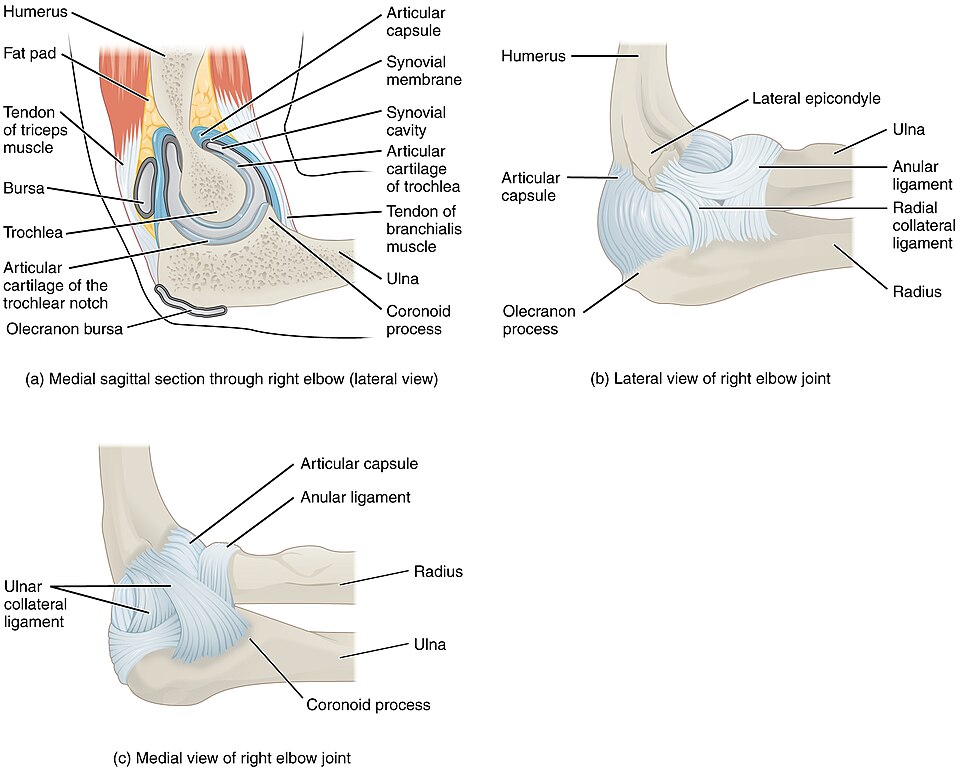
The tendon is reattached to the forearm bone through an incision at the front of the elbow. Long-standing tears may need reconstruction with a graft.
Who is a candidate for distal biceps tendon repair?
Active patients with a complete tear, ideally within the first few weeks after injury.
How is the procedure performed?
Through an incision at the front of the elbow, the retracted tendon is retrieved and reattached to its place on the radius using a button, anchors or a screw.
What is recovery like?
A hinged brace that is opened gradually over about 6 weeks, with lifting limited to very light objects at first. Heavy lifting usually resumes around 4 to 6 months.
How do I prepare for surgery?
Before surgery you will receive instructions on medications to stop, when to stop eating and drinking, and skin preparation. Arrange for an adult to drive you home and stay with you the first night, and schedule your first physical therapy visit in advance when one is planned. Read the pre-op instructions.
What happens if the tendon is not repaired?
The arm still bends, because other muscles share that job, but there is a lasting loss of strength, greatest in turning the palm up, as in using a screwdriver, and of endurance. Some patients, particularly those with lower demands, accept this and do well without surgery.
When can I drive, work and return to lifting?
Driving usually resumes at two to four weeks. Desk work is often possible within a week. Lifting is limited to very light objects for the first six weeks, strengthening begins at around three months, and heavy lifting usually resumes at four to six months. See the rehabilitation protocols.
What are the risks?
Specific risks include numbness along the outer forearm, which is usually temporary, weakness of the muscles that lift the wrist and fingers from a nerve stretch, extra bone forming near the repair, and re-tear. As with any operation, there are risks of infection, bleeding, blood clots, stiffness, nerve or blood vessel injury and problems with anesthesia. These are uncommon, and steps are taken before, during and after surgery to lower them.
This page is general information, not medical advice. Recovery times are typical ranges and vary from person to person.
ELBOW TREATMENTS
All elbow topics
Tommy John Reconstruction
Distal Biceps Tendon Repair
Tennis and Golfer’s Elbow Treatment
Fracture Care
Injections
AT A GLANCE
Manoj P. Reddy, MD
- Board-certified orthopaedic surgeon, fellowship-trained in sports medicine and shoulder surgery at the Rothman Orthopaedic Institute
- Orthopaedic surgery residency at the University of Chicago
- Specializes in arthroscopic, reconstructive and joint replacement surgery of the shoulder, knee and elbow
- Assistant team physician for the Philadelphia 76ers, Eagles and Phillies during fellowship; covers Rowlett, Garland and Naaman Forest high schools
- Author of 27 peer-reviewed publications in sports medicine
- Living Magazine Top Doctor, 2024

