

AC Joint Reconstruction in North Texas. Dr. Manoj P. Reddy offers this treatment at his Dallas, Rockwall and Garland offices.
What is an AC joint reconstruction?
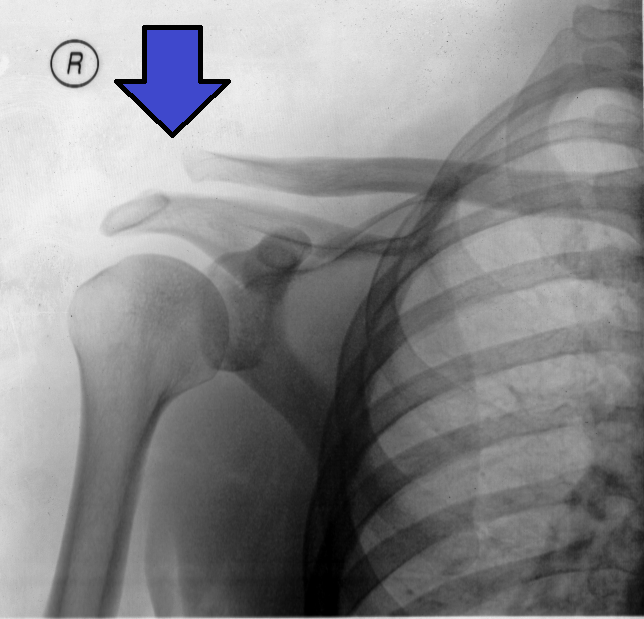
The torn ligaments that hold the collarbone down are reconstructed, often with a tendon graft and strong suture, to restore the alignment of the joint.
Who is a candidate for AC joint reconstruction?
High-grade separations and lower-grade injuries that remain painful or unstable.
How is the procedure performed?
Through an incision over the top of the shoulder, the collarbone is brought back into position. It is secured to the coracoid below with strong suture and, in most reconstructions, a tendon graft that takes the place of the torn ligaments.
What is recovery like?
A sling for about 6 weeks to protect the reconstruction, then gradual motion and strengthening. Contact sports are usually around 5 to 6 months.
How do I prepare for surgery?
Before surgery you will receive instructions on medications to stop, when to stop eating and drinking, and skin preparation. Arrange for an adult to drive you home and stay with you the first night, and schedule your first physical therapy visit in advance when one is planned. Read the pre-op instructions.
Does timing matter?
Fresh high-grade separations can sometimes be repaired within the first few weeks while the torn ligaments are still able to heal. After that, the ligaments have scarred in a lengthened position and a reconstruction with a tendon graft is used instead.
When can I drive, work and return to sport?
Driving resumes after the sling comes off at about six weeks. Desk work is often possible within one to two weeks. Lifting and overhead work are restricted for about three months, and contact sports usually resume at five to six months. See the rehabilitation protocols.
What are the risks?
Specific risks include loss of the correction over time, fracture of the collarbone or coracoid, and prominence of the hardware or knots. As with any operation, there are risks of infection, bleeding, blood clots, stiffness, nerve or blood vessel injury and problems with anesthesia. These are uncommon, and steps are taken before, during and after surgery to lower them.
This page is general information, not medical advice. Recovery times are typical ranges and vary from person to person.
SHOULDER TREATMENTS
All shoulder topics
Shoulder Arthroscopy
Rotator Cuff Repair and Revision
Arthroscopic Shoulder Stabilization
Latarjet Procedure
Labral and SLAP Repair
Biceps Tenodesis
Total and Reverse Shoulder Replacement
AC Joint Repair and Reconstruction
Clavicle Fracture Repair
Fracture Repair
Pectoralis Major Tendon Repair
Frozen Shoulder Treatment
Injections
AT A GLANCE
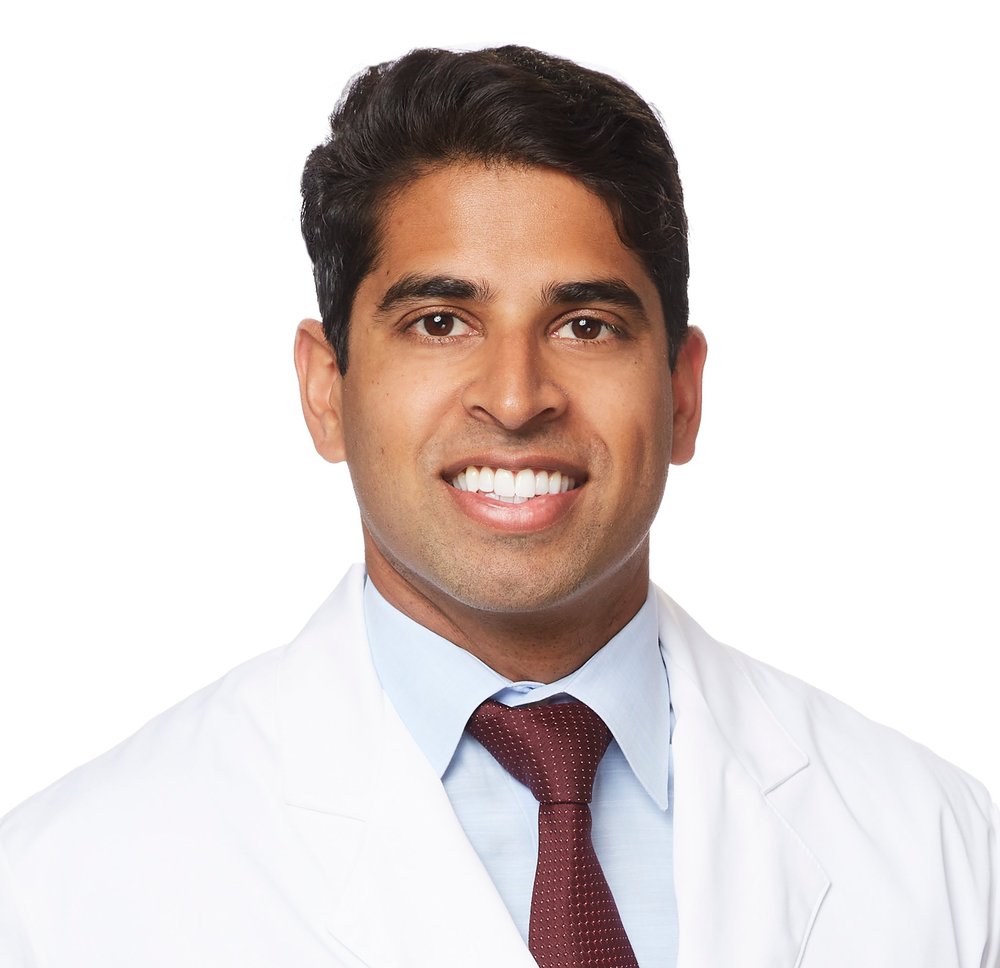
Manoj P. Reddy, MD
- Board-certified orthopaedic surgeon, fellowship-trained in sports medicine and shoulder surgery at the Rothman Orthopaedic Institute
- Orthopaedic surgery residency at the University of Chicago
- Specializes in arthroscopic, reconstructive and joint replacement surgery of the shoulder, knee and elbow
- Assistant team physician for the Philadelphia 76ers, Eagles and Phillies during fellowship; covers Rowlett, Garland and Naaman Forest high schools
- Author of 27 peer-reviewed publications in sports medicine
- Living Magazine Top Doctor, 2024

