

AC Joint Injuries care in North Texas. Dr. Manoj P. Reddy evaluates and treats this condition at his Dallas, Rockwall and Garland offices.
What is an AC joint injury?
The acromioclavicular (AC) joint is where the collarbone meets the roof of the shoulder blade. It is held together by the AC ligaments and, just below, the stronger coracoclavicular ligaments. An AC joint injury, often called a shoulder separation, is a sprain or tear of these ligaments. It is a different injury from a shoulder dislocation, which involves the ball-and-socket joint.
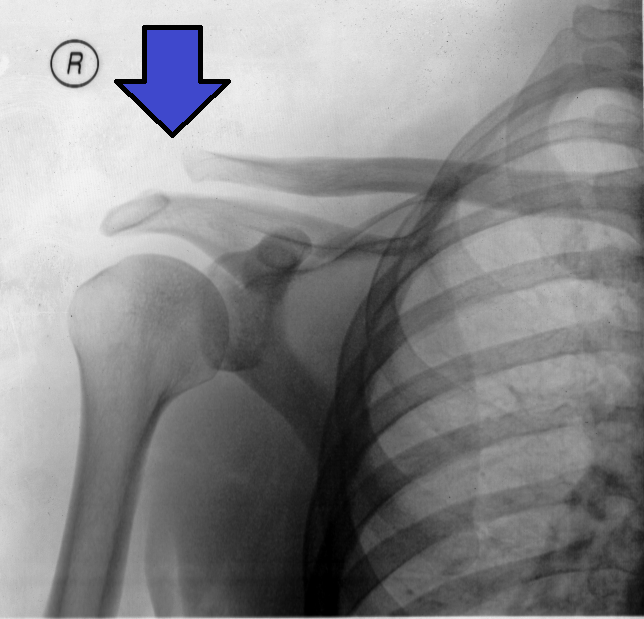
What causes an AC joint injury?
Most happen from a fall or blow directly onto the point of the shoulder with the arm at the side. They are common in cycling, football, hockey, rugby and skiing.
How are AC joint injuries graded?
Injuries are graded by how many ligaments are torn and how far the collarbone has shifted:
- Mild (grades 1 and 2): the AC ligaments are sprained or torn, with little or no shift of the collarbone.
- Moderate (grade 3): both sets of ligaments are torn and the collarbone sits higher than normal.
- Severe (grades 4 to 6): the collarbone is widely displaced.
What are the symptoms?
- Pain and swelling on top of the shoulder
- A bump at the end of the collarbone
- Pain reaching across the body, overhead or lying on that side
- Bruising in the first few days
How is it diagnosed?
By examination and X-rays, sometimes comparing both shoulders. An MRI is occasionally used to look at the ligaments or other injuries.
How is an AC joint injury treated?
Mild and most moderate injuries are treated without surgery: a sling for comfort for one to two weeks, ice, and physical therapy to restore motion and strength. Many athletes return to sport within a few weeks. The bump usually remains but rarely limits function.
Severe separations, and moderate injuries that stay painful or weak after rehabilitation, may be treated with reconstruction of the torn ligaments. After surgery the shoulder is protected in a sling for about six weeks, and contact sports typically resume at around five to six months.
This page is general information, not medical advice. Recovery times are typical ranges and vary from person to person.
AT A GLANCE
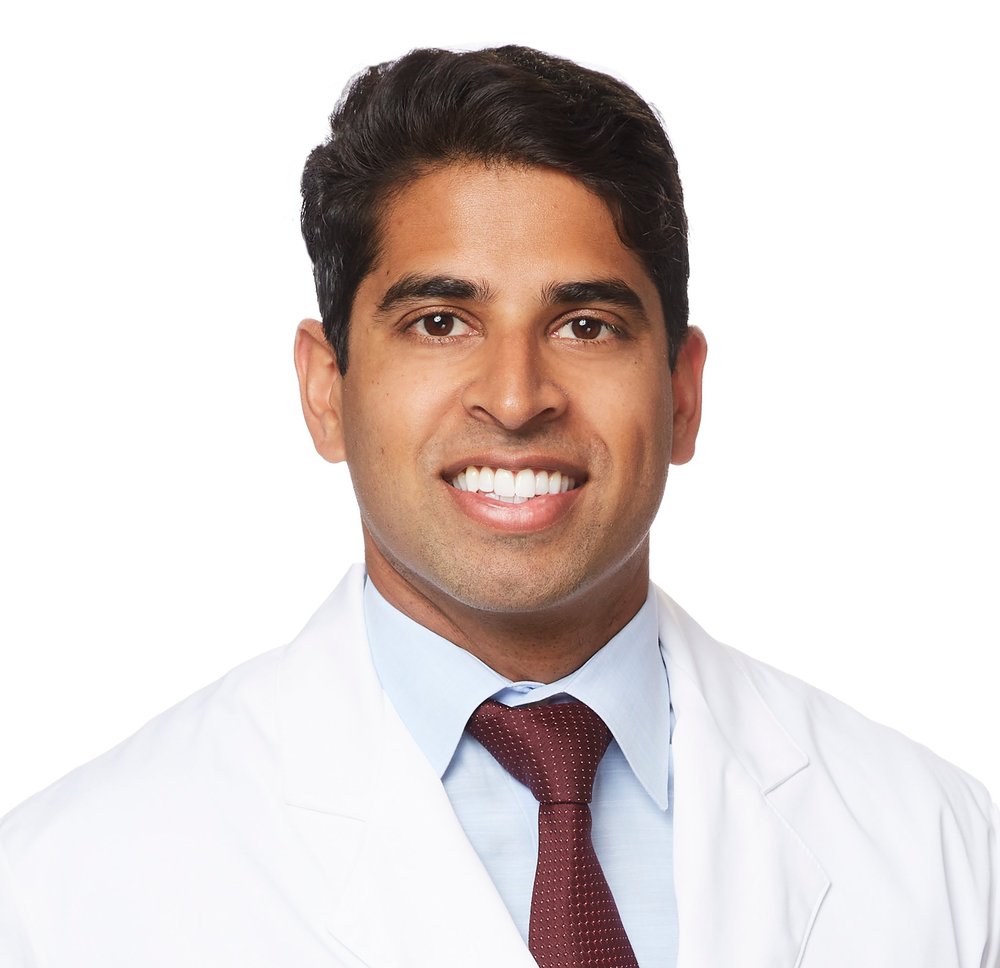
Manoj P. Reddy, MD
- Board-certified orthopaedic surgeon, fellowship-trained in sports medicine and shoulder surgery at the Rothman Orthopaedic Institute
- Orthopaedic surgery residency at the University of Chicago
- Specializes in arthroscopic, reconstructive and joint replacement surgery of the shoulder, knee and elbow
- Assistant team physician for the Philadelphia 76ers, Eagles and Phillies during fellowship; covers Rowlett, Garland and Naaman Forest high schools
- Author of 27 peer-reviewed publications in sports medicine
- Living Magazine Top Doctor, 2024

