

Shoulder Arthritis and Replacement care in North Texas. Dr. Manoj P. Reddy evaluates and treats this condition at his Dallas, Rockwall and Garland offices.
What is shoulder arthritis?
Arthritis is the loss of the smooth cartilage covering the ball and socket. As the cartilage wears, the joint becomes painful and stiff, and bone spurs form.
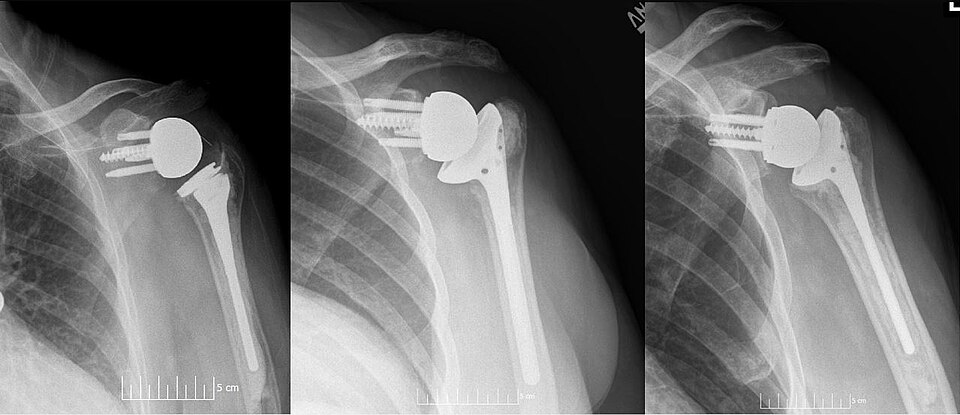
What causes it?
- Osteoarthritis: gradual wear, most common after age 50.
- Post-traumatic arthritis: after a fracture or repeated dislocations.
- Rotator cuff tear arthropathy: arthritis that develops after a large, long-standing rotator cuff tear.
- Inflammatory arthritis: such as rheumatoid arthritis.
What are the symptoms?
- Deep, aching pain that worsens with activity and at night
- Stiffness and loss of motion
- Grinding or catching with movement
How is it diagnosed?
X-rays usually show the diagnosis, with narrowing of the joint space and bone spurs. A CT scan is often used before surgery to assess the shape of the socket, and an MRI may be ordered to check the rotator cuff.
What are the non-surgical options?
Activity modification, physical therapy to maintain motion, anti-inflammatory medication and corticosteroid injections can provide relief, particularly in earlier stages.
What are the types of shoulder replacement?
- Anatomic total shoulder replacement: the ball is replaced with a metal implant and the socket with a plastic one. It relies on an intact, working rotator cuff.
- Reverse shoulder replacement: the positions of the ball and socket are switched, which lets the deltoid muscle lift the arm. It is used when the rotator cuff is torn or not functioning, and for some fractures.
What is recovery like?
Most patients go home the same day or the next. The arm is supported in a sling for a few weeks while gentle motion begins, and strengthening follows. Pain relief is usually noticeable early, and motion and strength continue to improve for six months to a year.
This page is general information, not medical advice. Recovery times are typical ranges and vary from person to person.
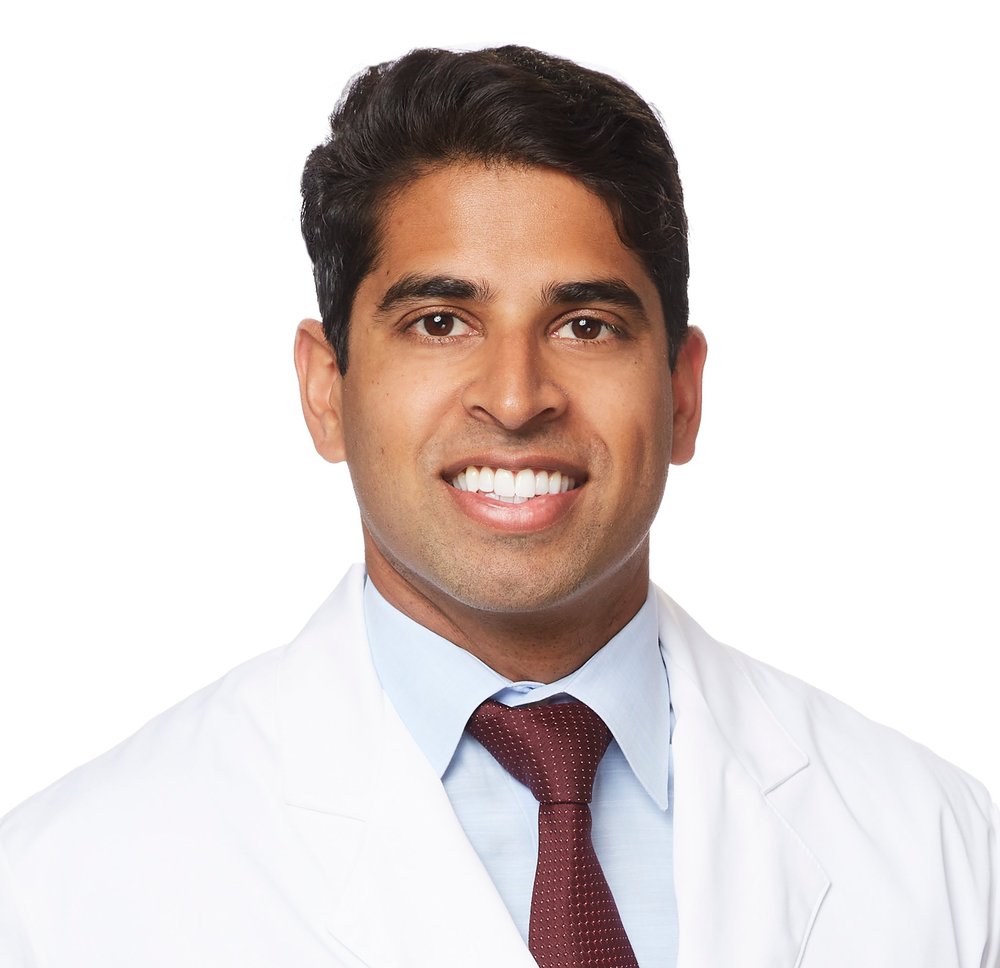
AT A GLANCE
Manoj P. Reddy, MD
- Board-certified orthopaedic surgeon, fellowship-trained in sports medicine and shoulder surgery at the Rothman Orthopaedic Institute
- Orthopaedic surgery residency at the University of Chicago
- Specializes in arthroscopic, reconstructive and joint replacement surgery of the shoulder, knee and elbow
- Assistant team physician for the Philadelphia 76ers, Eagles and Phillies during fellowship; covers Rowlett, Garland and Naaman Forest high schools
- Author of 27 peer-reviewed publications in sports medicine
- Living Magazine Top Doctor, 2024

