
MCL Injuries and Reconstruction in North Texas. Dr. Manoj P. Reddy offers this treatment at his Dallas, Rockwall and Garland offices.
What is the MCL?
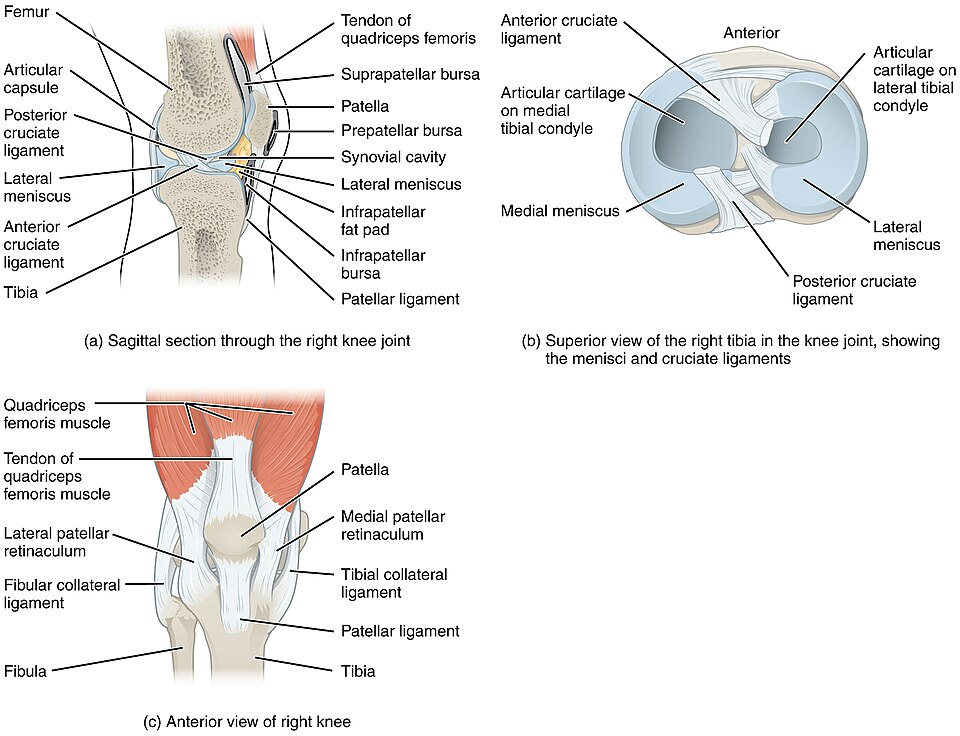
The medial collateral ligament (MCL) runs along the inner side of the knee from the thigh bone to the shin bone. It resists forces that push the knee inward and helps control rotation. It has a superficial layer and a deeper layer attached to the meniscus.
How is the MCL injured?
Most injuries happen when a force strikes the outside of the knee, or when the knee buckles inward during a cut or landing. It is one of the most commonly injured knee ligaments in football, soccer, skiing and wrestling.
How are MCL injuries graded?
- Grade 1: a sprain with tenderness but no looseness.
- Grade 2: a partial tear with some looseness and a firm end point.
- Grade 3: a complete tear with the inner side of the knee opening under stress.
Do MCL tears heal without surgery?
Usually, yes. The MCL has a good blood supply and most tears, including many complete ones, heal with a hinged brace, early motion and progressive strengthening. Typical return to sport is one to two weeks for grade 1, three to four weeks for grade 2 and six weeks or more for grade 3.
Download the MCL sprain non-operative protocol.
When is surgery needed?
- The ligament has pulled off the shin bone and flipped out of position, so it cannot heal back
- A complete tear occurs with other ligament injuries and the knee remains loose
- The inner side of the knee is still unstable after a full period of bracing and rehabilitation
How is the MCL repaired or reconstructed?
Through an incision on the inner side of the knee, a fresh tear that has pulled off bone can be reattached with anchors and reinforced. For long-standing looseness or poor-quality tissue, the ligament is reconstructed with a tendon graft fixed to the thigh bone and shin bone at the original attachment points.
What is recovery like after surgery?
A hinged brace is worn for about six weeks, with protected weight bearing early and a gradual increase in bending. Stiffness is the main concern after MCL surgery, so motion is started early. Return to sport is typically five to six months, and longer when other ligaments were reconstructed.
What are the risks?
Specific risks include stiffness, some remaining looseness and numbness on the inner side of the knee or shin from a small skin nerve. As with any operation, there are also general risks of infection, blood clots, stiffness, nerve or blood vessel injury and problems with anesthesia. These are uncommon, and steps are taken to lower them.
This page is general information, not medical advice. Recovery times are typical ranges and vary from person to person.
KNEE TREATMENTS
ACL and Ligament Surgery
ACL Reconstruction and Revision
PCL Reconstruction
MCL Reconstruction
Multi-Ligament Reconstruction
Meniscus Surgery
Meniscus Repair and Meniscectomy
Meniscus Root Repair
Meniscus Transplant
Cartilage and Realignment
Cartilage Restoration
MACI Cartilage Implantation
Osteochondral Allograft (OCA)
Knee Osteotomy
Kneecap Stabilization
Patellar Stabilization
MPFL Reconstruction
Tibial Tubercle Osteotomy
Other Knee Treatments
Knee Arthroscopy
Quadriceps and Patellar Tendon Repair
Partial Knee Replacement
Injections

AT A GLANCE
Manoj P. Reddy, MD
- Board-certified orthopaedic surgeon, fellowship-trained in sports medicine and shoulder surgery at the Rothman Orthopaedic Institute
- Orthopaedic surgery residency at the University of Chicago
- Specializes in arthroscopic, reconstructive and joint replacement surgery of the shoulder, knee and elbow
- Assistant team physician for the Philadelphia 76ers, Eagles and Phillies during fellowship; covers Rowlett, Garland and Naaman Forest high schools
- Author of 27 peer-reviewed publications in sports medicine
- Living Magazine Top Doctor, 2024

