
PCL Reconstruction in North Texas. Dr. Manoj P. Reddy offers this treatment at his Dallas, Rockwall and Garland offices.
What is the PCL?
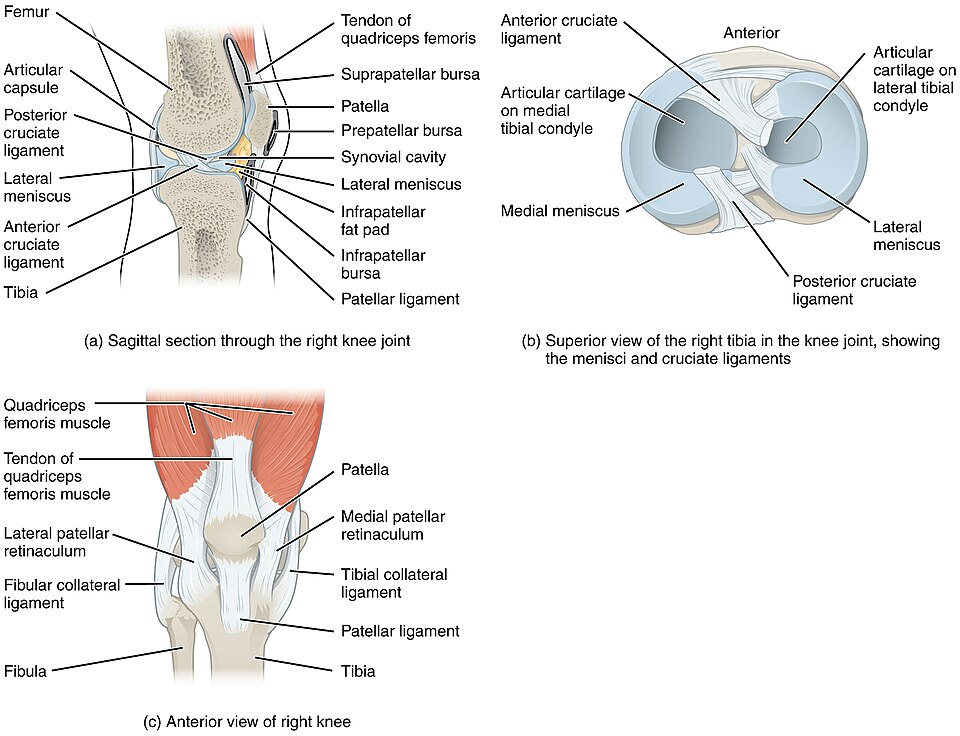
The posterior cruciate ligament (PCL) sits in the center of the knee behind the ACL. It is the strongest ligament in the knee and stops the shin bone from sliding backward under the thigh bone.
How is the PCL injured?
- A direct blow to the front of the bent knee, such as hitting the dashboard in a collision
- A fall onto a bent knee with the foot pointed down
- A hyperextension or twisting injury in sport
- As part of a multi-ligament injury or knee dislocation
What are the symptoms?
PCL injuries are often less dramatic than ACL tears. There may be mild swelling, pain at the back of the knee, and a vague sense that the knee is not right, particularly going downstairs or slowing down. Combined injuries cause more obvious instability.
Do all PCL tears need surgery?
No. Isolated partial tears and many complete isolated tears do well without surgery. Treatment uses a brace that supports the shin bone from behind while the ligament heals, followed by a therapy program that emphasizes the quadriceps.
Reconstruction is recommended when the PCL is torn together with other ligaments, when the ligament has pulled off a piece of bone, or when an isolated tear continues to cause pain or instability after rehabilitation.
How is PCL reconstruction performed?
The operation is arthroscopic, with small additional incisions. The remnant of the torn ligament is cleared and tunnels are drilled in the thigh bone and shin bone at the ligament’s attachment points. A tendon graft is passed through the tunnels and fixed at each end. X-ray is used during surgery to confirm tunnel position, because the structures behind the knee must be protected. Other torn ligaments are reconstructed in the same operation or in stages.
What is recovery like?
Recovery is slower than after ACL reconstruction because the graft must be protected from the weight of the lower leg pulling it backward. A brace is used for several months, early bending exercises are done lying face down, and hamstring strengthening is delayed. Weight bearing is limited for about six weeks.
Running usually begins at around six months, and return to sport is commonly nine to twelve months.
Download the PCL reconstruction protocols.
What are the risks?
Specific risks include some remaining looseness, stiffness, and, rarely, injury to the artery or nerve behind the knee. As with any operation, there are also general risks of infection, blood clots, stiffness, nerve or blood vessel injury and problems with anesthesia. These are uncommon, and steps are taken to lower them.
This page is general information, not medical advice. Recovery times are typical ranges and vary from person to person.
KNEE TREATMENTS
ACL and Ligament Surgery
ACL Reconstruction and Revision
PCL Reconstruction
MCL Reconstruction
Multi-Ligament Reconstruction
Meniscus Surgery
Meniscus Repair and Meniscectomy
Meniscus Root Repair
Meniscus Transplant
Cartilage and Realignment
Cartilage Restoration
MACI Cartilage Implantation
Osteochondral Allograft (OCA)
Knee Osteotomy
Kneecap Stabilization
Patellar Stabilization
MPFL Reconstruction
Tibial Tubercle Osteotomy
Other Knee Treatments
Knee Arthroscopy
Quadriceps and Patellar Tendon Repair
Partial Knee Replacement
Injections

AT A GLANCE
Manoj P. Reddy, MD
- Board-certified orthopaedic surgeon, fellowship-trained in sports medicine and shoulder surgery at the Rothman Orthopaedic Institute
- Orthopaedic surgery residency at the University of Chicago
- Specializes in arthroscopic, reconstructive and joint replacement surgery of the shoulder, knee and elbow
- Assistant team physician for the Philadelphia 76ers, Eagles and Phillies during fellowship; covers Rowlett, Garland and Naaman Forest high schools
- Author of 27 peer-reviewed publications in sports medicine
- Living Magazine Top Doctor, 2024

