

Frozen Shoulder care in North Texas. Dr. Manoj P. Reddy evaluates and treats this condition at his Dallas, Rockwall and Garland offices.
What is frozen shoulder?
Frozen shoulder, or adhesive capsulitis, is a condition in which the flexible lining of the shoulder joint (the capsule) becomes inflamed and then thickens and tightens. The result is pain and stiffness in every direction. It is not caused by a torn tendon or by arthritis.
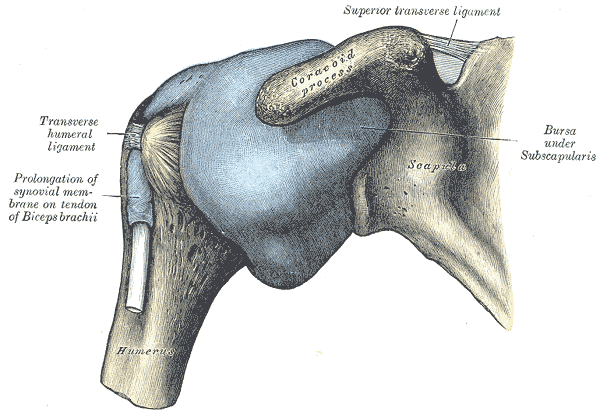
What causes frozen shoulder?
Often there is no clear cause. It is most common between the ages of 40 and 60 and in women, and much more common in people with diabetes or thyroid disease. It can also begin after a minor injury, surgery or a period of keeping the arm still.
Are there stages of frozen shoulder?
- Freezing (painful) stage, about 2 to 9 months: pain builds, especially at night, and motion is steadily lost.
- Frozen (stiff) stage, about 4 to 12 months: pain eases, but the shoulder stays stiff.
- Thawing stage, about 6 months to 2 years: motion gradually returns.
The stages overlap and the timing varies widely.
How is it diagnosed?
Mostly by examination. The shoulder is stiff both when you move it and when someone else tries to move it, especially rotating outward. An X-ray is usually taken to rule out arthritis. An MRI is usually not needed.
How is frozen shoulder treated?
- Gentle home stretching and physical therapy
- A steroid injection into the joint, which is most effective for pain in the early stage
- Anti-inflammatory medication or acetaminophen, if safe for you
- Heat before stretching and ice afterward if sore
Forceful stretching, especially in the painful stage, can inflame the shoulder and make it worse. Stretch to a gentle pull only.
Will I need surgery?
Rarely. If the shoulder has not improved after about 6 to 12 months of good treatment, options include a manipulation under anesthesia or an arthroscopic release of the tight capsule, followed immediately by intensive therapy. Almost everyone improves, and most regain enough motion for everyday activities.
See the frozen shoulder FAQ and home stretching program.
This page is general information, not medical advice. Recovery times are typical ranges and vary from person to person.
AT A GLANCE
Manoj P. Reddy, MD
- Board-certified orthopaedic surgeon, fellowship-trained in sports medicine and shoulder surgery at the Rothman Orthopaedic Institute
- Orthopaedic surgery residency at the University of Chicago
- Specializes in arthroscopic, reconstructive and joint replacement surgery of the shoulder, knee and elbow
- Assistant team physician for the Philadelphia 76ers, Eagles and Phillies during fellowship; covers Rowlett, Garland and Naaman Forest high schools
- Author of 27 peer-reviewed publications in sports medicine
- Living Magazine Top Doctor, 2024

